

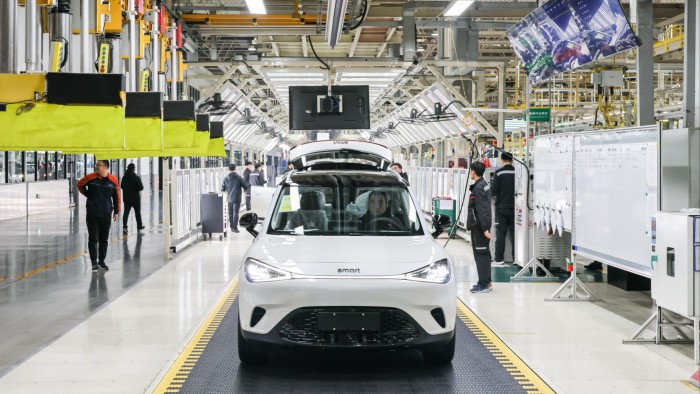
Last week, it was confirmed that the world surpassed 1.5 degrees Celsius of warming for the first time last year, highlighting the urgent reality of climate change. As we look ahead, China’s role will be crucial. Currently, China is the world’s largest emitter of greenhouse gases but is also leading the charge in green technology. The International Energy Agency predicts that a significant 60% of all new renewable energy capacity globally by 2030 will come from China. The country is a major producer of wind turbines, solar panels, electric vehicles, and lithium-ion batteries, and it holds a strong position in the supply chain for essential minerals.
For Western nations, China’s dominance in green technology raises two main concerns. First, the low prices of Chinese products, supported by substantial government subsidies, could push Western competitors out of the market, making them reliant on China for key technologies. Second, there are worries about the security risks associated with “smart” technology used in everything from electric vehicles to turbines. This ongoing discussion was highlighted during UK Chancellor Rachel Reeves’ recent visit to Beijing, which focused on green energy and business ties.
China’s lead in green technology is rooted in its early investments in critical minerals. As the shift towards renewable energy accelerated, the country ramped up its subsidies and investments in green technologies. In 2023, China’s clean energy investments surged by 40% to $890 billion, making it a significant driver of economic growth. The nation has already met its goal of achieving 1,200 gigawatts of installed solar and wind capacity—enough energy to power millions of homes—six years ahead of schedule. Additionally, electric vehicles are expected to outsell traditional gas-powered cars in China this year, a decade earlier than anticipated.
Given that China accounts for about 30% of global carbon emissions, it’s clear that its continued progress is essential for the rest of the world. However, with global emissions targets for 2050 looking uncertain—and the visible impacts of warming, such as the recent fires in Los Angeles—advanced economies are finding it increasingly necessary to rely on inexpensive Chinese wind and solar technologies. The high costs of critical minerals and financing mean that without assistance from China, these nations may be unable to meet their environmental goals.
While it’s logical for the US and Europe to work towards building their own green supply chains to reduce dependency, attempts to exclude China from the market through protective measures can be costly and counterproductive given the urgent need to address climate change.
Since China has an abundance of green technology, one possible approach could involve encouraging Beijing to provide more access to its intellectual property in exchange for market entry. Instead of completely blocking Chinese green imports, Western countries could implement stricter technology inspections and ensure local control over facilities using Chinese components, while determining if vulnerable smart technology can be isolated or replaced.
By remaining open to affordable green technologies from China, countries can better focus their resources on areas where they hold strengths. For instance, America excels in carbon capture and storage and has a solid climate financing system. The EU is at the forefront of advanced climate research and, in 2020, produced more green technology patents than the US or China. The UK leads in offshore wind projects, while Brazil specializes in biofuels. Collaborating on these technologies could hasten the global transition to renewable energy.
Although China is currently leading in green technology, the more critical race is the one to mitigate climate change. To succeed, countries must develop strategies to cooperate with China in this arena while minimizing potential risks.