

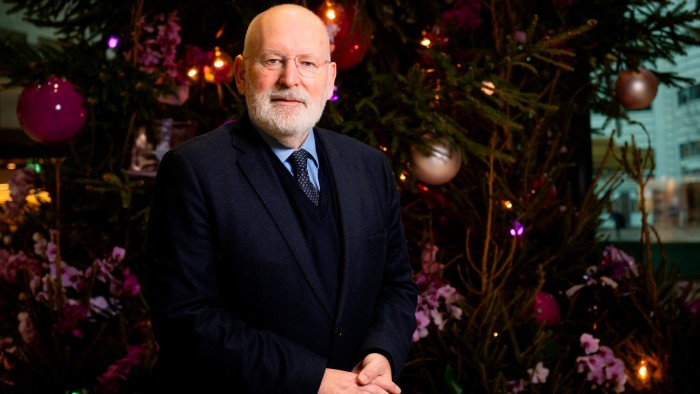
European voters may turn away from efforts to combat climate change unless wealthier individuals contribute more to support greener initiatives, according to Frans Timmermans, the key figure behind the EU’s “Green Deal.”
Speaking as the leader of the Dutch Green/Labour coalition, Timmermans highlighted a sense of discontent among citizens who face rising costs for essentials like fuel and food while being asked to upgrade to newer, greener technologies such as boilers and cars. “Public money has often gone to those who are well-off and can afford these changes,” he remarked, stressing the importance of focusing support on the most disadvantaged to counteract the rising popularity of “dishonest” radical right-wing parties offering easy solutions.
Timmermans proposed that a fair ecological transition relies on solidarity, akin to a tax system where wealthier individuals support the collective effort more heavily. He pointed out that many affluent people still maintain high carbon footprints while lower-income individuals are cutting back on consumption out of necessity, not environmental commitment. Rising energy prices and inflation have forced the latter group to make more sustainable choices.
At 63 years old, Timmermans has been a driving force in Brussels over the last few years, and he argues that despite opposition, governments must continue pushing forward with green policies. He dismissed arguments from the automotive industry for more time to transition to electric vehicles. Leaders like Germany’s Olaf Scholz and Italy’s Giorgia Meloni have suggested easing penalties for missing emissions targets due to job losses in the industry.
EU auto manufacturers are also facing tough competition from cheaper electric vehicles produced in China. Timmermans criticized the auto industry for not adapting sooner, stating, “They complained about their inability to compete while others were already advancing the electric mobility agenda.” He acknowledged that while the car industry has valid points about incentives and infrastructure, the slow response lies largely with national governments rather than EU lawmakers.
He advocated for the EU to follow the United States in introducing substantial financial support to both industry and consumers to aid the transition through shared borrowing. Scholz had previously called for Europe-wide incentives for electric car purchases but has blocked the idea of creating eurobonds.
Timmermans noted that the current speed of industrial change is unprecedented, potentially leading to more disruption than previous revolutions. This rapid evolution has contributed to the rise of populist parties that provide seemingly straightforward solutions to complicated issues. He expressed concern that the belief that future generations will be better off is fading, creating a defensive mentality about existing resources.
This growing sense of insecurity might be fueling apprehensions about immigration, according to Timmermans. He criticized the radical right for exploiting these fears with messages that promise a return to a simpler past, which he believes to be fundamentally misleading and bound to lead to disappointment.
In the recent elections in the Netherlands, the Green/Labour alliance placed second to Geert Wilders’ far-right Freedom party. Wilders has teamed up with several right-leaning groups to form a government that aims to reduce migration, cut education spending, and ease environmental protections for farmers. However, they have encountered challenges in making their policies a reality due to internal strife and resistance from the Dutch Senate, putting the stability of the government at risk.
Timmermans has described the current Dutch administration as “rudderless” and expressed a preference for new elections, feeling that the electorate should be allowed to voice its desires once again.