

The future of America’s natural gas exports is facing uncertainty after a recent federal government report raised concerns about the impact of unregulated growth. The Department of Energy’s study, released on Tuesday, suggests that continued expansion could lead to higher domestic fuel prices and hinder global climate efforts.
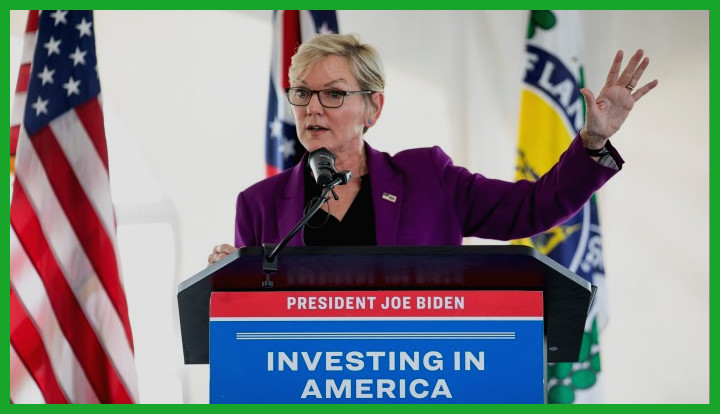
Energy Secretary Jennifer Granholm emphasized that a “business as usual” approach is not sustainable. She noted that while the liquefied natural gas (LNG) industry may see increased profits, American households and our environment could suffer the consequences.
The U.S. LNG sector has rapidly expanded over the past ten years, propelled mainly by European demand for American gas following Russia’s invasion of Ukraine. The surge in U.S. LNG shipments has been vital for European consumers grappling with rising energy prices.
In 2022, the U.S. surpassed Australia to become the largest LNG exporter in the world, providing significant amounts of gas to countries like Germany and France. However, there are plans to double exports by the end of this decade.
President Joe Biden’s administration paused the approval of new export terminals earlier this year as it examined the potential impacts of this growth, leading to criticism from the oil and gas sector.
The new report projected that increasing exports could raise domestic natural gas prices by over 30% by 2050, with annual household energy bills potentially increasing by more than $122.
While former President Donald Trump has promised to resume the licensing of export terminals if re-elected, the report’s findings might challenge this push. The oil and gas industry argues that such exports would help combat climate change by replacing coal in energy production. However, the study suggests that new LNG exports could actually lead to less renewable energy being utilized globally, potentially increasing overall emissions.
The American Petroleum Institute, a major oil lobbying group, disputed the report, arguing that LNG exports have historically kept natural gas prices low for consumers. Meanwhile, environmental groups believe the findings support calls to slow the growth of the LNG industry.
Legal challenges against further developments might emerge based on the study’s conclusions, with experts urging the next administration to take the report seriously to prevent potential legal issues in the future.
Granholm warned that increased LNG exports could inadvertently undermine U.S. energy security and benefit geopolitical rivals like China, which is expected to become the largest importer of LNG by 2050.
Despite some disagreement on the report’s implications, experts acknowledge that LNG plays a significant role in international energy dynamics, especially in the context of allies responding to threats from adversaries like Russia.