

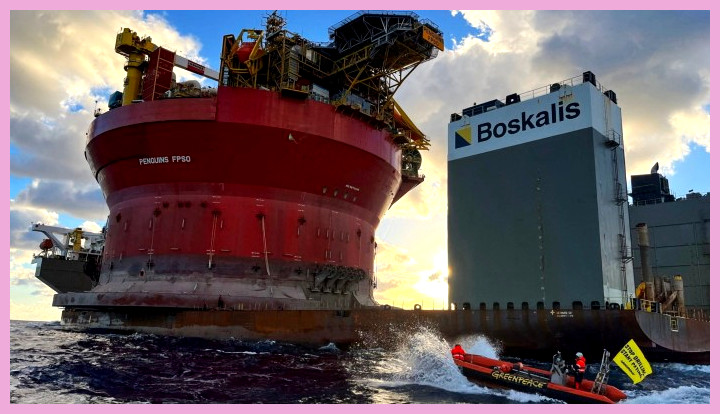
Shell and Greenpeace have reached a resolution in one of the most significant legal battles initiated by Shell against the environmental organization. This case followed a protest in 2023 when Greenpeace activists occupied one of Shell’s floating production units near the Shetland Islands.
As part of the settlement, Greenpeace has agreed to contribute £300,000 to the Royal National Lifeboat Institution. Shell had expressed concerns that the protest posed risks to its crew at sea.
Greenpeace creatively transformed the lawsuit’s narrative, portraying it as an attempt by a major polluter to suppress free speech, and even drew cultural references from popular media. The case was dubbed the “Cousin Greg” lawsuit, referencing a character from the show Succession who threatens to sue Greenpeace. To support their cause, series creator Jesse Armstrong donated $25,000 to their legal fund, with backing from prominent actors like Emma Thompson and Stephen Fry.
Areeba Hamid, co-executive director of Greenpeace in the UK, highlighted the settlement as a testament to the collective power of supporters, noting the increase in public donations and engagement. “Shell aimed to intimidate us with a lawsuit for millions over a peaceful protest, but it turned into a public relations challenge for them,” she stated.
On the other hand, Shell celebrated the settlement, indicating their priority was the safety of their personnel. The company expressed satisfaction that the resolution included a donation benefiting a charity focused on maritime safety.
Initially, Shell had proposed a settlement that required Greenpeace to refrain from any protests at its sea or port installations worldwide, but Greenpeace declined. However, they have now agreed to keep a distance of at least 500 meters from four Shell platforms in the North Sea for the next five years.
The protest involved activists using ropes and harnesses to board one of Shell’s offshore vessels while it was being transported across the Atlantic. They displayed a banner demanding Shell to “stop drilling, start paying,” highlighting their call for fossil fuel profits to support climate change initiatives.
Despite the settlement, Greenpeace still faces hefty legal costs exceeding $11 million related to this lawsuit but confirmed they are not admitting any liability and will not pay any damages to Shell. The organization continues to encounter similar legal challenges as backlash against environmental activism grows among fossil fuel companies.
Greenpeace claims it is facing an “existential threat” in the US due to a lawsuit from the pipeline company Energy Transfer regarding protests from 2016. Additionally, Italian oil giant Eni has also initiated legal action against Greenpeace in October.