

BP is navigating choppy waters as it faces challenges in the offshore wind sector. Just four years ago, the company was confident about the long-term prospects of offshore wind, stating that it would yield attractive returns for decades. However, recent decisions show a significant shift in strategy.
On Monday, BP announced that it is merging its offshore wind assets with Jera, Japan’s largest power generation company. This changes the game for BP, especially as its British competitor, Shell, has also put a stop to new offshore wind projects due to struggles in the market.
While this retreat might feel embarrassing for BP, it does mark a necessary step in addressing the identity crisis that has loomed since 2020. Back then, the former CEO set a bold path toward energy transition. By partnering with Jera, BP can alleviate fears about how much it will need to invest in offshore wind for the rest of the decade.
Investors were expecting BP to dedicate about one-third of its $30 billion budget for renewables and hydrogen over the next years to offshore projects. Now, BP’s maximum contribution to the partnership will only be $3.25 billion, which is considerably less than feared, especially since its spending in 2023 and 2024 has been under $2 billion.
The partnership could also pave the way for smoother sales in the future, making the asset mix more appealing if the renewables market bounces back. Other companies, like Italy’s Eni, have already had success selling similar stakes at favorable prices.
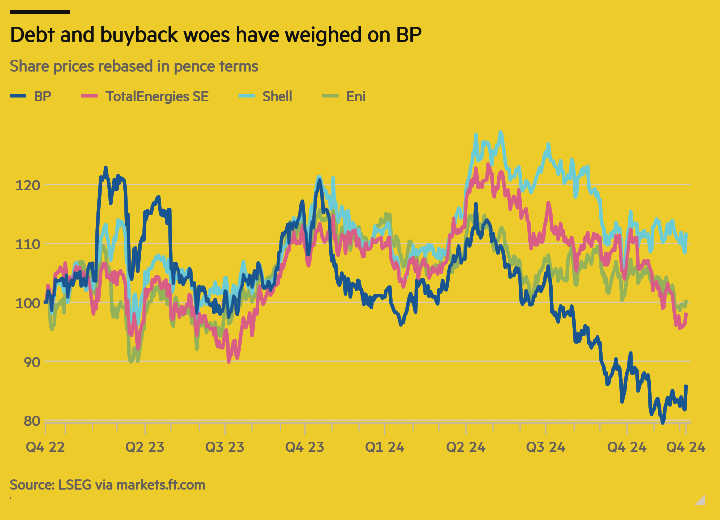
However, BP’s current CEO Murray Auchincloss has more on his plate. Investors are still concerned about the company’s levels of debt, as it’s projected to finish the year as the most highly indebted oil major in Europe. With an expected share buyback plan of at least $14 billion over the next two years, the recent dip in oil prices has raised doubts about whether BP can follow through on these buybacks.
As a result, analysts predict a major re-evaluation during BP’s annual results update in February, possibly even suspending share buybacks entirely.
BP once aimed to be seen as a leader in the energy transition, but its recent moves suggest a different narrative might unfold in the years to come.