

Good morning! Today, we take a closer look at the recent shifts in energy prices and the potential impact on the future of the U.S. power market.
This week, oil prices fell sharply, reaching levels not seen in several years. Concerns about a slowdown in economic growth in both China and the U.S. have sent Brent crude below $70 per barrel for the first time in three years, marking a 13% drop since late August. Fatih Birol, the head of the International Energy Agency (IEA), has indicated prices may continue to decline because of decreasing demand and increased oil supplies from non-OPEC nations.
Birol noted in a recent interview that “weak demand” paired with an overabundance of oil could put additional pressure on pricing. The agency’s forecasts regarding future oil demand have stirred controversy within the oil industry, with critics claiming the IEA is engaging in political behavior. Meanwhile, ExxonMobil’s recent outlook has drawn ire from climate advocates who fear the potential consequences for global energy prices should investments in fossil fuels diminish.
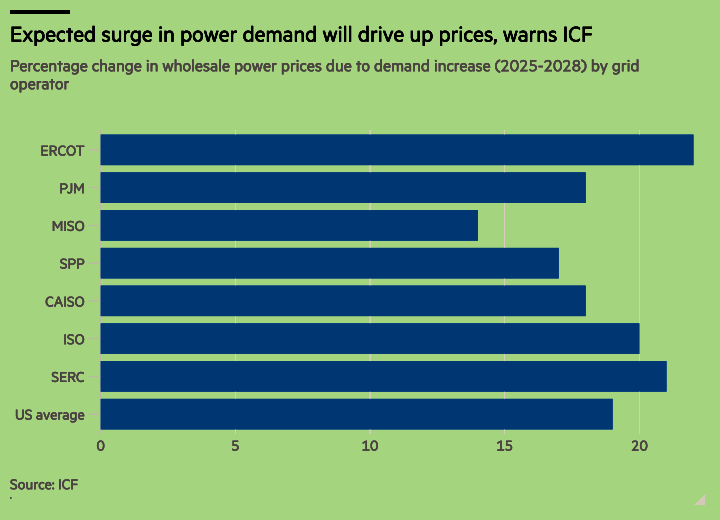
Shifting our focus, a report by the consultancy ICF highlights that the anticipated rise in electricity demand—stemming from the electrification of various sectors and increased needs by data centers associated with artificial intelligence—could lead to higher U.S. power prices. ICF predicts that wholesale electricity prices may jump by 19% from 2025 to 2028. Though households typically do not buy electricity directly from the wholesale market, these wholesale changes will influence utility rates.
Patty Cook, ICF’s senior vice-president of market development, emphasized that the growing complexity of achieving clean, affordable power significantly affects how utilities allocate costs and how those costs are ultimately passed on to consumers.
The ICF’s analysis anticipates a significant surge in electricity consumption—projecting a rise of 9% by 2028, a stark contrast from the less than 1% annual growth recorded for most years since 2010.
In a related opinion piece, climate scientist Michael Mann critiques Exxon’s annual outlook, warning it could lead to dangerous climate consequences if fossil fuel reliance continues unchecked. Exxon’s predictions suggest that global carbon dioxide emissions will only decline by 25% by 2050, which many experts believe would dramatically elevate global temperatures and worsen climate disasters.
Mann argues that Exxon’s projections favor corporate profit over environmental safety and are not aligned with achieving the UN climate goals established to combat global warming.
As we look toward the future, ongoing transitions in energy demand and the urgency of climate action will remain key issues for policy makers and businesses alike.
In addition to these developments, the energy sector is also witnessing notable leadership changes. Cliff Graham has been appointed as the new CEO of renewable energy developer Avantus, while James Fitzgerald has joined Marathon Capital as head of institutional sales.
In other news, Russian President Vladimir Putin has called for discussions on uranium restrictions in response to Western sanctions, and Abu Dhabi’s Adnoc plans to make a significant acquisition, potentially marking a major European deal.
Stay tuned for more updates on these unfolding stories in the energy sector!