

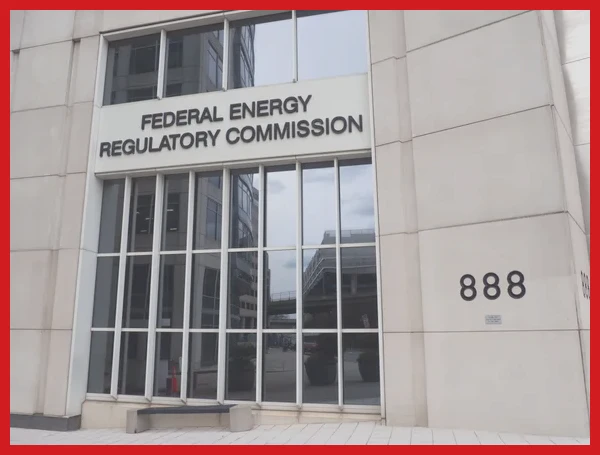
In a significant and contentious ruling, the Federal Energy Regulatory Commission (FERC) announced on Thursday a new regulation that prohibits payments to power plant owners for the provision of reactive power within the conventional power factor range—a controversial decision that has sparked vehement opposition from generators.
"This initiative is designed to protect transmission providers from unfair charges that lack a solid economic foundation or justification, thereby ensuring that consumers don’t bear the burden of costs that offer no proportional benefit," FERC asserted.
Under the new framework, interconnection customers will only receive compensation for reactive power if directed by the transmission provider to operate outside the designated "deadband" range outlined in their agreements. This change marks a pivotal shift in energy provision protocols.
FERC articulated that generating facilities are essential in either generating or absorbing reactive power to maintain the necessary voltage levels within the transmission system. The regulation, which is poised to take effect 60 days after publication in the Federal Register, classifies reactive power supplied outside the deadband range—specifically from 0.95 leading to 0.95 lagging—as an ancillary service.
"At the end of the day, this is fundamentally about affordability, and we are committed to doing everything possible to mitigate costs for consumers," proclaimed FERC Chairman Willie Phillips during the agency’s monthly meeting.
Commissioner Lindsay See expressed his pride in the decision, emphasizing the importance of reducing rates that are inadequately justified for ratepayers.
FERC’s ruling disrupts existing payment structures, impacting only the PJM Interconnection, ISO New England, and the New York Independent System Operator (NYISO) which, according to FERC, currently compensate generators for reactive power within their established deadband ranges. For context, PJM’s market monitor disclosed that, in 2023 alone, generators received $388 million for their reactive capabilities, while NYISO and ISO-NE disbursed $75 million and $18 million, respectively.
Notably, the proposal faced harsh criticism from a consortium of opponents, including the American Council on Renewable Energy, the Solar Energy Industries Association, and several other stakeholders in the energy sector. They contended FERC’s claim that the costs incurred in providing reactive power are negligible was fundamentally flawed.
Conversely, proponents of the rule, including PJM and various ratepayer advocates within New England and beyond, lauded the potential for cost savings. For instance, American Electric Power (AEP) conveyed that the new rule could alleviate burdens associated with exhaustive and extensive reactive power rate proceedings for individual generators.
In addition to the reactive power ruling, several key insights emerged from the meeting.
Phillips’ Optimism on Nuclear Power: With palpable enthusiasm, Phillips addressed the burgeoning interest in nuclear energy nationwide, particularly in light of companies like Amazon and Google exploring small modular reactors for their data centers. "There is immense hope surrounding small modular nuclear technology," he remarked, reinforcing his commitment to a diverse energy strategy.
FERC Shuns Challenges to Backstop Siting Regulation: Underscoring its stance, FERC upheld its decision to amend regulations concerning permits for electric transmission facilities within national interest corridors, dismissing objections from Earthjustice and regulatory bodies in several states. The agency highlighted the necessity for applicants to demonstrate constructive engagement with stakeholders, especially when tribal land rights are involved.
MISO’s Return on Equity Refunds: In a remand order, FERC directed Midcontinent Independent System Operator (MISO) transmission owners to adopt a revised base return on equity (ROE) of 9.98% for their assets, down from a previous rate, mandating refunds with interest dating back to late 2013.
NERC’s Budget Approval: Finally, FERC granted the North American Electric Reliability Corporation (NERC) a 2025 budget of $123.1 million, signifying an increase aimed at bolstering costs associated with critical risk-sharing programs within the electric sector.
Each of these developments not only illuminates the FERC’s regulatory landscape but also underscores the dynamic challenges and opportunities oscillating within the energy sector.