

The International Energy Agency has unveiled its latest world energy outlook, a document that reverberates with the bold declaration of heralding a new “age of electricity.” As global temperatures soar, the clamor for air conditioning escalates, electric vehicles proliferate, and a veritable cottage industry of data centers rises, the implications for energy consumption are profound and far-reaching.
In a striking projection, the agency anticipates that global power demand will surge by an astonishing annual increment of 1,000 terawatt hours—an increase so substantial it parallels the entire electricity use of Japan each year. This is not merely a statistic; it’s a clarion call signaling a seismic shift in energy dynamics worldwide.
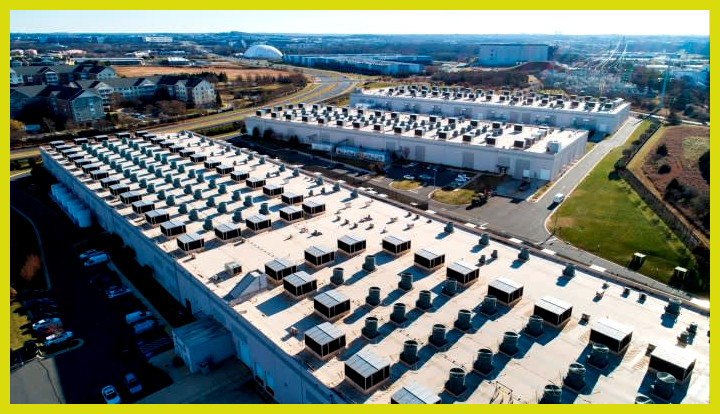
An electric tornado of transformation is sweeping through the United States, fueled by soaring ambition in artificial intelligence. Developers, caught in a whirlwind of excitement, are scrambling to erect data centers across the country. In a remarkable uptick, the first half of 2024 has already seen announcements of nearly 24GW in new data center capacity—an astonishing threefold increase compared to the same period last year, surpassing the total additions of the entire previous year, as revealed by a recent report from Wood Mackenzie.
Chris Seiple, the vice-chair of Wood Mackenzie’s power and renewables group, expressed the gravity of this development: “A load of this magnitude has never been witnessed in recorded history.” The race is on to secure land and the vital energy connections required to support this burgeoning data center capacity.
Virginia, Texas, and Georgia stand tall as the forerunners in this expansive endeavor, having collectively announced more than 18GW of capacity since January 2023. Virginia boasts Loudoun County, famously dubbed “Data Centre Alley,” a hotbed where over 3,500 tech firms have set up shop. The competition among giants like Amazon, Meta, Google, and Microsoft is heating up, with collective investments in data center construction expected to soar to $178 billion by 2025—a staggering 11 percent increase year-on-year. Highlighting this trend, Amazon’s recent $11 billion investment in northern Indiana marks an unprecedented capital outflow in the state’s historical narrative.
As these data centers expand, their average capacity has surged by 8MW per month since the start of 2023, a clear indication of the relentless hunger for data processing capabilities. These facilities are the multifaceted backbone of the digital economy, facilitating everything from photo storage to cryptographic mining and training sophisticated generative AI models.
The relentless rise of AI is the driving force behind this unprecedented data center boom, with a corresponding surge in the quest for abundant, clean energy. Yet, as Wood Mackenzie elucidates, U.S. utilities are currently grappling with a staggering backlog exceeding 100GW of data center capacity awaiting interconnection to the energy grid—a burgeoning demand that has many industry insiders warning of an impending power shortfall that could place a damper on the nation’s energy transition efforts.
However, the burgeoning demand for energy cannot rest solely at the feet of data centers. The epicenter of construction is entrenched within key energy markets like PJM Interconnection in the mid-Atlantic and CAISO in California, though they only scratch the surface of the broader demand landscape. Electric vehicle charging is poised for explosive growth in regions like the northeast and California, while ongoing initiatives to establish new battery, solar panel, and semiconductor manufacturing plants are expected to add an additional 15GW of power demand in the coming years.
Seiple encapsulates the broader implications of these changes: “Manufacturing is now at the heart of political discussions focused on job creation and reducing reliance on China for essential components in our supply chain. Additionally, the push to ground significant AI technology on U.S. soil is another critical political issue.” He adds with a note of gravity, “Utilities are indeed caught in the crosshairs of this evolving landscape.”
In the realm of corporate maneuvering, several key leadership transitions are unfolding. Ahmed El-Hoshy is stepping down as CEO of OCI Global, with CFO Hassan Badrawi poised to take the helm. Phillips 66 welcomes Grace Puma Whiteford to its board of directors, while Elkhan Mammadov shifts to senior vice-president of production at BP. NEO Energy is also undergoing changes as Paul Harris steps down, succeeded by Andy McIntosh, with CTO Martin Rowe also departing. Meanwhile, NANO Nuclear Energy is bringing in former U.S. Department of Energy CFO John Vonglis to chair its advisory board.
And yet, the energy landscape remains fluid: Abu Dhabi’s national oil company is determined to continue pumping crude even as it diversifies; Amazon is making strategic moves by acquiring a stake in U.S. nuclear developer X-energy with the goal of providing low-carbon electricity to its data centers; and Woodside Energy, Australia’s largest oil and gas developer, is opting to delist its shares from the London Stock Exchange, underscoring the shifting winds in the global natural resources sector.