

Brief:
- State energy regulators and officials have a unique opportunity to bolster the case for advanced nuclear reactors by leveraging cogeneration strategies. These frameworks allow nuclear facilities not only to generate electricity but also to deliver a variety of additional services to clients, as articulated in a recently released report by the National Association of Regulatory Utility Commissioners and the National Association of State Energy Officials.
- The report outlines potential avenues for growth, encompassing distributed electric power solutions tailored for data centers and high-demand users; innovative applications of electricity and waste heat, such as in district heating and water desalination; and the production of high-temperature process heat crucial for heavy industrial processes.
- According to the findings, these initiatives “will be instrumental in unlocking pathways for consistent nuclear energy generation during both peak and off-peak times, thereby facilitating supplementary revenue streams that could catalyze the launch and maturation of first-of-their-kind advanced nuclear ventures.”
Insight:
The NARUC/NASEO report classifies advanced reactors into two distinct categories: Generation III+ frameworks that integrate well-known light-water cooling mechanisms with passive safety features, and Generation IV designs that employ non-water fluids or gases for cooling, often necessitating the use of high-assay low-enriched uranium fuel (HALEU).
While the U.S. has yet to see a fully operational Gen IV reactor, notable strides are being made, as TerraPower initiated non-nuclear construction for its proposed 345-MW commercial demonstration reactor in Wyoming in June. In contrast, Georgia boasts the Westinghouse AP-1000 reactors at Plant Vogtle units 3 and 4, which proudly fall under the Gen III+ classification.
It’s noteworthy that both Gen III+ and Gen IV reactors possess the capability to operate at significantly elevated temperatures compared to their predecessors, thereby expanding their applicability in scenarios demanding heat alongside electricity, as indicated by NARUC and NASEO.
In a concerted effort to attract cutting-edge nuclear technology, several states have recently allocated funds aimed at fostering cogeneration frameworks or behind-the-meter electricity generation.
For instance, Tennessee—home to the Oak Ridge National Laboratory—has been actively supporting advancements. The lab is the site where Kairos Power is crafting advanced test reactors utilizing a groundbreaking uranium fuel form, complemented by the establishment of a $50 million nuclear fund last year to nurture research, development, and deployment within the sector.
Moreover, Virginia made headlines last year by launching a $10 million nuclear fund to cultivate a “nuclear innovation hub.” This year, the state has empowered Dominion Energy to pursue a rate adjustment for a prospective small modular reactor (SMR) at the North Anna nuclear power station. A feasibility study commissioned previously has pinpointed seven viable SMR locations in southwest Virginia, where the Energy DELTA Lab envisions a low-carbon 1-GW data center complex alongside a hydrogen production facility.
On the opposite end of Virginia, the Surry Green Energy Center shares a similar aspiration for a 1-GW data center complex and hydrogen production, projected to be ultimately powered by a suite of four to six SMRs.
According to the report, advanced nuclear reactors stand ready to undergird a vast spectrum of energy-intensive initiatives extending far beyond just data centers and hydrogen production. They include distributed electric power channels for resource extraction and national defense, as well as innovations in electricity and waste heat utilization for needs like district heating, desalination, direct air capture, and high-temperature process heat for industries producing chemicals, steel, glass, and cement.
The report highlights a variety of U.S. and global projects currently active or under development, reflecting the growing trend toward cogeneration or behind-the-meter applications utilizing advanced nuclear reactors.
- Among these is a proposal for the deployment of a BWXT high-temperature gas reactor to support mining activities in Wyoming, backed by $10 million from the state’s Energy Matching Funds program.
- Notably, advanced nuclear reactors are presently providing district heating for roughly 400,000 individuals across Russia and China.
- A significant 950-MW reactor is operational, powering a large-scale desalination facility in Russia.
- Ongoing studies in both the U.S. and the U.K. are investigating the possibilities for nuclear reactors to energize facilities dedicated to capturing carbon dioxide from the atmosphere.
- A synergistic partnership between Dow Chemical and X-energy aims to channel 320 MWe of nuclear capacity into a Texas petrochemical complex.
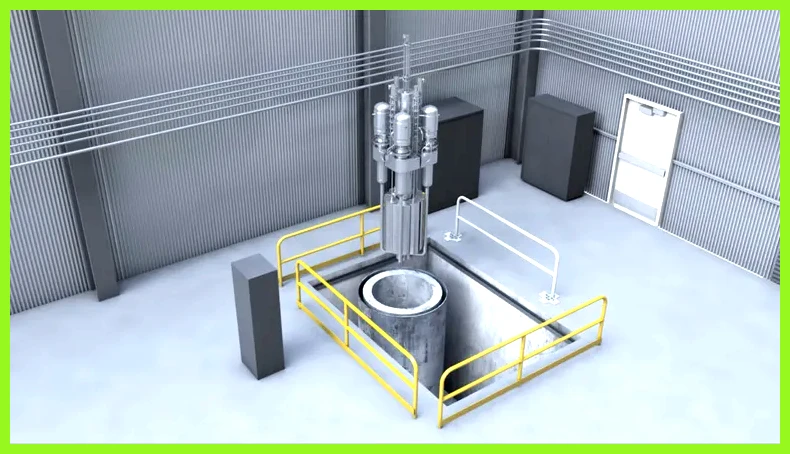
- The U.S. Department of Defense is also making strides with its microreactor initiative, Project PELE, which seeks to implement small, flexible high-temperature gas reactors at remote locations.
In a related move, the U.S. Army issued a call for proposals in June for a subsequent defense initiative that would facilitate on-base microreactor deployments, thereby lessening the Army’s dependency on traditional grid power and backup diesel generators.