

A Snapshot of Current Events
October 11, 2024
Data source: U.S. Energy Information Administration
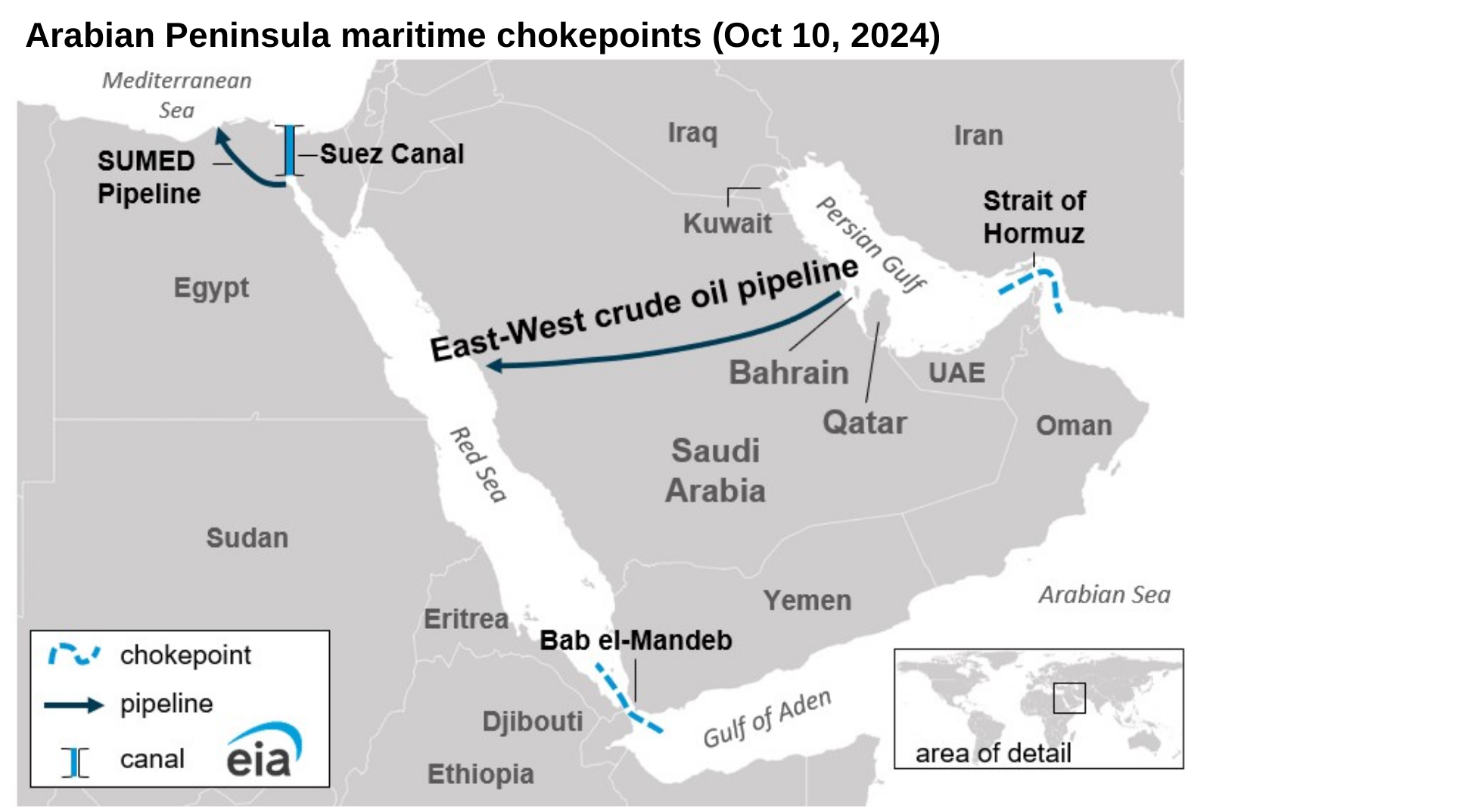
The flow of crude oil and oil derivatives through the Bab el-Mandeb Strait—a critical maritime chokepoint at the Red Sea’s southern gateway—has plummeted by more than 50% during the initial eight months of 2024.
Chokepoints represent narrow passages along heavily trafficked maritime routes, and their significance to global energy security cannot be overstated. A temporary disruption in oil transit through any major chokepoint can precipitate extensive supply delays and escalate shipping costs, inevitably driving world energy prices upward.
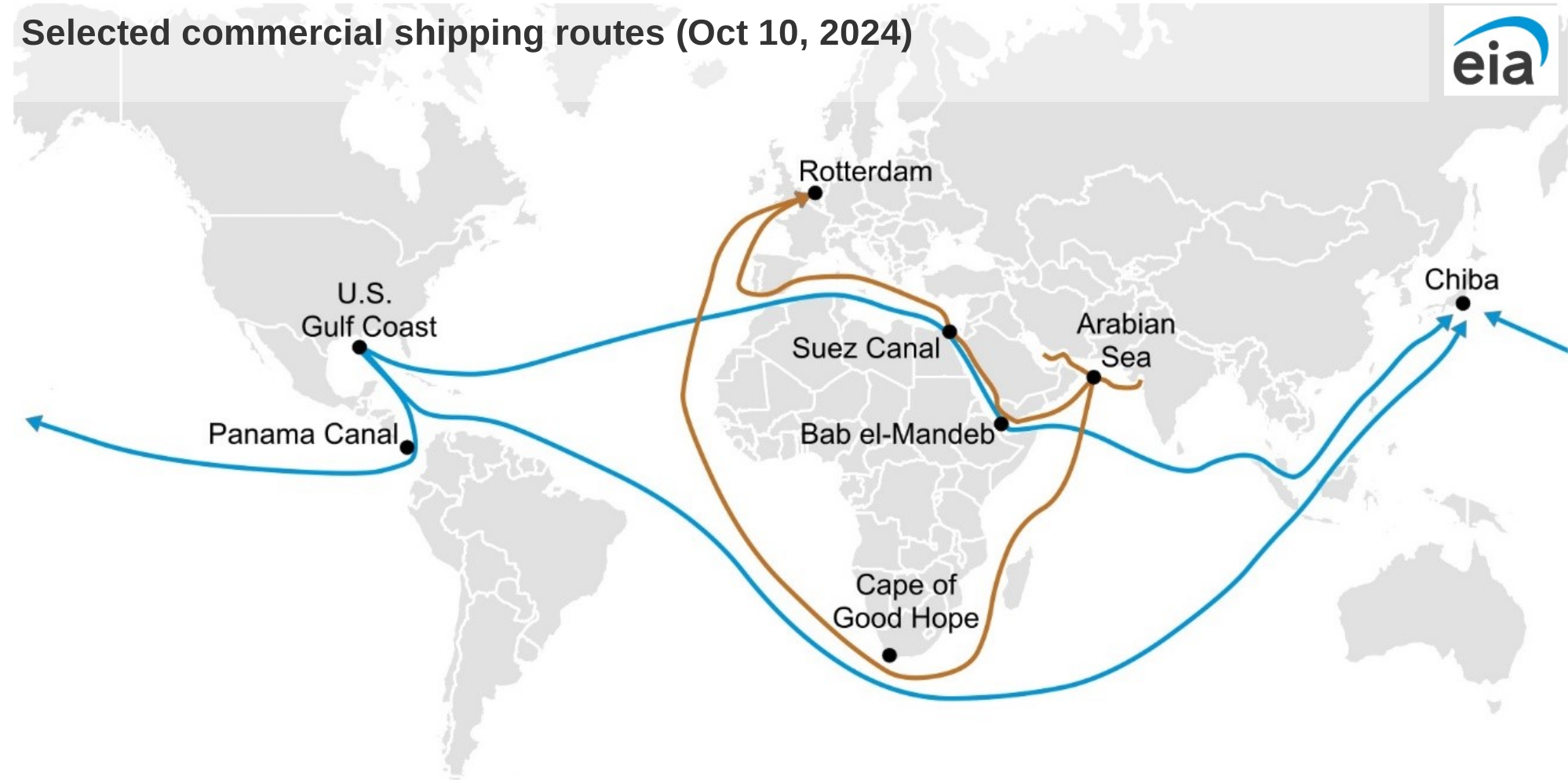
Following a series of attacks by Yemen-based Houthi militias on commercial vessels in the Red Sea beginning in November 2023, many shipping lines have opted to circumvent the Bab el-Mandeb Strait—a slender corridor abutting Yemen—opting instead for longer, more costly passages around Africa’s Cape of Good Hope.
Consequently, oil trade flows through the Red Sea have experienced a dramatic decline over the past year. Vortexa’s data illustrates that the throughput via Bab el-Mandeb averaged a mere 4.0 million barrels per day (b/d) from January to August 2024, starkly contrasted with 8.7 million b/d for the entirety of 2023.
The Suez Canal, the SUMED pipeline, and the Bab el-Mandeb Strait form strategic arteries for Persian Gulf oil and natural gas deliveries to Europe and North America. Nestled in Egypt, the Suez Canal and SUMED pipeline connect the Red Sea with the Mediterranean, amplifying their significance.
Notably, the volume of crude oil and oil products traversing the Cape of Good Hope surged to 9.2 million b/d during the first eight months of 2024, a leap from an average of 6.0 million b/d in 2023.
In the meanwhile, the Strait of Hormuz—positioned between Oman and Iran—serves as a pivotal junction linking the Persian Gulf to the Gulf of Oman and the Arabian Sea. This strait is indeed the globe’s most critical oil chokepoint, with a staggering 20.9 million b/d flowing through it in 2023, accounting for approximately 20% of global petroleum liquids consumption. Additionally, nearly one-fifth of the world’s liquefied natural gas (LNG) trade also moved through Hormuz last year.
Data source: U.S. Energy Information Administration
Meanwhile, despite holding the title of the world’s third-largest oil reserve holder and second-largest natural gas reserve holder as of 2023, Iran has faced constraints on its production due to international sanctions. Nonetheless, total petroleum and other liquids output in Iran rebounded from a nadir of less than 3.0 million b/d in 2020 to an average of 4.0 million b/d in 2023; of that, nearly 2.9 million b/d constituted crude oil, with the balance comprised of condensate and hydrocarbon gas liquids.
On the other hand, Saudi Arabia has solidified its status as the globe’s third-largest producer of crude oil and condensate, additionally reigning as the foremost crude oil exporter and the top crude oil producer within OPEC. In 2023, the Kingdom’s average output reached an impressive 9.5 million b/d.
Israel, emerging as the second-largest natural gas producer in the Eastern Mediterranean, has been on an upward trajectory since natural gas extraction commenced at the Tamar field in 2013. The initiation of several offshore reserves has since enabled Israel not only to satisfy its burgeoning domestic energy needs but also to enhance its export capabilities to Egypt and Jordan. By 2022, Israel’s natural gas production reached a robust 808 billion cubic feet (Bcf).
Global oil prices and the U.S. market
Over the last decade, imports of crude oil from Persian Gulf nations to the United States have diminished in tandem with the surging domestic production landscape. In 2023, these imports averaged 609,000 b/d, a dramatic decline from 2.0 million b/d in 2013, now comprising merely 9.3% of the total U.S. crude oil imports.
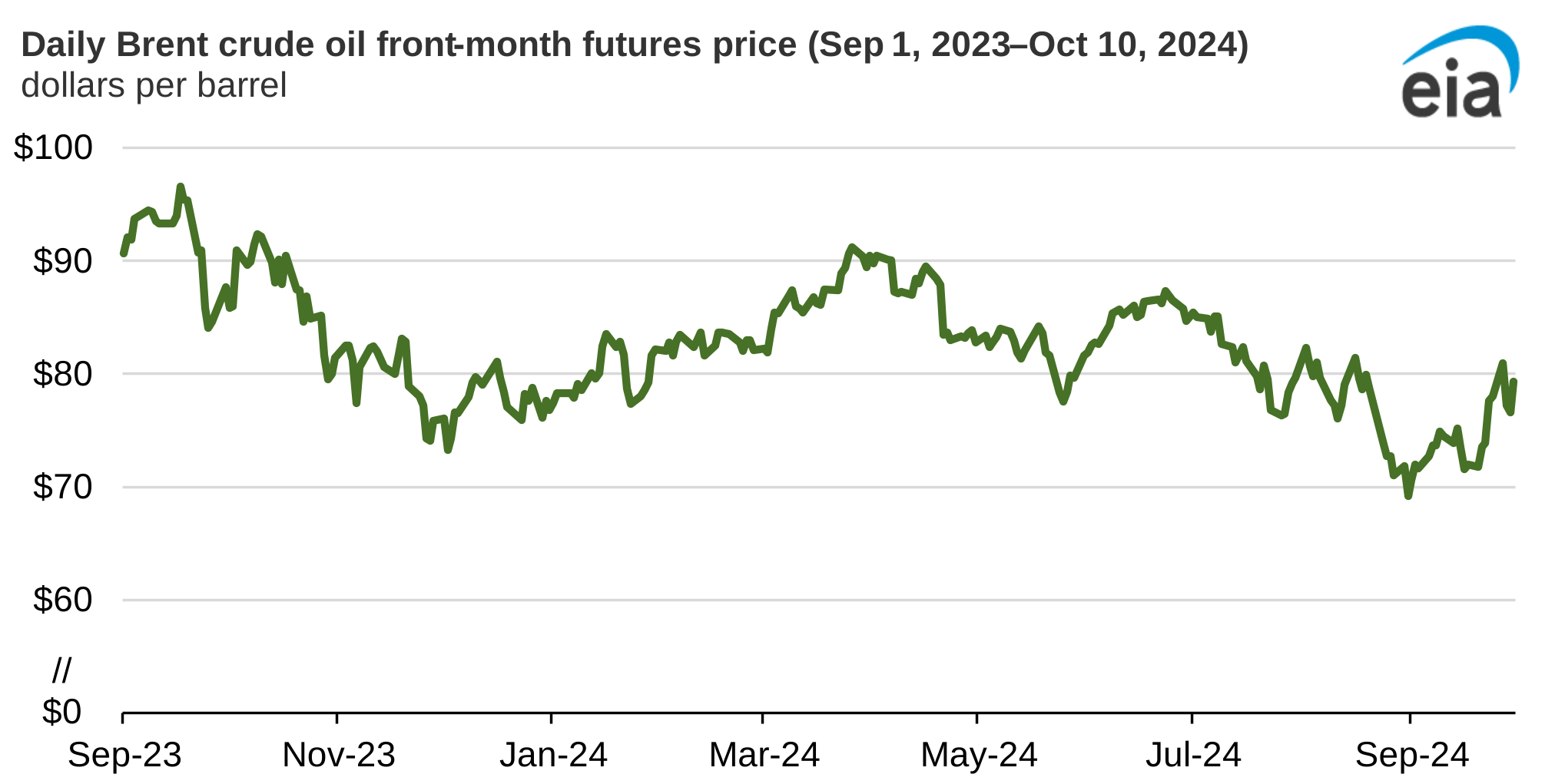
The global oil market is inextricably linked, where localized disruptions can reverberate throughout the international energy trade, inciting ripples in pricing structures across the globe. Escalating tensions in the Middle East have further amplified geopolitical uncertainties affecting global oil price benchmarks in recent weeks. Following Iran’s strikes on Israel on October 1, 2024, Brent crude oil prices—the standard for international trading—climbed, reaching a peak of $81 per barrel on October 7. By October 10, Brent crude was noted at $79 per barrel.
Data source: Bloomberg, LLC
Principal contributors: Justine Barden, Candace Dunn, Paul Merolli