

In a dramatic twist in the ongoing geopolitical landscape, Ukraine has issued a stark warning: it might halt the transit of Russian gas to the European Union, a move that has thrust Slovak Prime Minister Robert Fico into a precarious position. Desperate to secure energy supplies while simultaneously rebuffing Kyiv’s aspirations for NATO membership, Fico finds himself navigating treacherous waters.
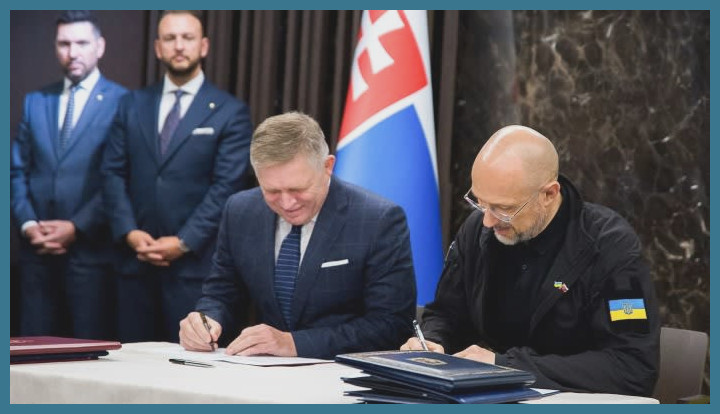
During a pivotal meeting with his Ukrainian counterpart, Prime Minister Denys Shmyhal, Fico was informed that Ukraine plans to let its transit contract with Naftogaz—the state energy company—lapse upon its expiration at the year’s end, thereby eliminating any obligation to facilitate Russian gas shipments. Yet, in a simultaneous gesture of diplomacy, Shmyhal underscored Ukraine’s commitment to its association agreement with the EU, acknowledging the “acute dependence” of Slovakia and several other EU nations on energy imports.
Fico lauded Ukraine’s interest in maintaining the Ukrainian transit system, framing it as mutually beneficial for Slovakia, while Shmyhal articulated Ukraine’s strategic ambition: to impose sanctions on Russian gas and pivot towards gradual diversification of its energy supplies.
The backdrop to this unfolding drama is stark. Following Russia’s invasion of Ukraine in February 2022, EU nations have aggressively sought ways to diminish their reliance on Russian energy. Today, gas exported via Ukrainian pipelines constitutes a mere 5% of the bloc’s total supply, yet three nations—Austria, Hungary, and Slovakia—continue to cling to Russian gas in significant quantities.
Experts like Mario Holzner from the Vienna Institute for International Economic Studies warn that while Europe may begin winter with its gas storage facilities sufficiently filled, a Ukrainian gas cut-off could spell disaster for the landlocked nations of Central Europe. Holzner further cautioned that Ukraine’s potential decision to close its pipelines carries its own risks: losing substantial transit fees and jeopardizing its own energy security, as Russian strikes could easily target its now vulnerable infrastructure.
Meanwhile, Slovakia is trying to weave alternative energy sources into its fabric, casting its gaze toward Azerbaijan, despite analysts cautioning about the potential of Baku reselling Russian gas under a different banner. Vladimír Šimoňák, the deputy minister for the economy, expressed reservations about the feasibility of importing Azerbaijani gas by next year, stating, “It’s technically feasible, but premature to make any firm assessments.”
In a peculiar twist, Šimoňák remarked on the complex financial relationship between Ukraine and Russia during their conflict, highlighting the paradox of two wartime adversaries engaging in extensive commercial transactions for gas.
Fico’s personal history adds yet another layer of complexity to this unfolding drama—he survived an assassination attempt just last May. His meeting with Shmyhal took place in Uzhhorod, near the volatile border with Ukraine, where Fico’s previous comments raising doubts about Ukraine’s sovereignty still linger. Yet, just weeks ago, he had expressed support for improved connections in transport and electricity between their nations.
As discussions continue, the stakes are high for both Slovakia and Ukraine. A Ukrainian official remarked last month that an anticipated supply agreement with Azerbaijan could empower Ukraine and the EU to reduce their ties to Moscow.
Despite having pledged to halt military supplies to Ukraine in the past, Slovakia under Fico’s leadership has not blocked EU assistance to Ukraine—a contrast starkly drawn with Hungary’s position—and Slovak defense companies have secretly dispatched weaponry valued at over €100 million to Kyiv. Fico’s unapologetic stance—“If we don’t produce, others will”—resonates strongly amidst these divergent interests.
Yet, Fico’s pro-Kremlin rhetoric raises eyebrows among Slovakia’s NATO allies. He explicitly stated he would oppose Ukraine joining NATO during his premiership. Nevertheless, after recent discussions with Shmyhal, he made a surprising promise of “unconditional” support for Ukraine’s EU candidacy.
In the political theatre that is unfolding, Slovak education minister Tomáš Drucker came to Fico’s defense, criticizing EU sanctions on Russia and suggesting that countries like Germany are turning a blind eye to loopholes employed by their own exporters dealing in Russian goods.
As Fico prepares for a visit to Moscow next May to commemorate the end of World War II, he invoked the historical narrative that “freedom came to Slovakia from the east,” a sentiment he reiterated amidst commemorations of the 1944 battle of the Dukla Pass. In an era rife with tension and uncertainty, these intertwining narratives of energy, sovereignty, and historical loyalty continue to shape the future trajectory of Slovakia and its complex relationships.