

Scott Miller is the executive director of the Western Power Trading Forum.
Scott Miller, who specializes in Western power issues, stays connected with peers addressing electricity market matters nationwide. Recently, many voices have expressed concerns about the Eastern markets, particularly the PJM Interconnection, especially regarding the capacity markets. Critiques suggest these markets are either excessively priced or overly controlled, and that PJM is struggling to effectively represent its stakeholders.
Capacity markets and ensuring resource adequacy are complex challenges. Fortunately, in the West, there is a focus on meeting resource adequacy through direct agreements rather than centralized methods. While the debates often center on pricing, the required levels for reliability are generally accepted. However, it remains a difficult task for regional transmission organizations attempting to standardize approaches.
Making the Most of Our Resources
An independent generation dispatch across a large, interconnected region is essential for efficiently utilizing existing transmission capacity. The West is currently working toward better day-ahead markets, moving away from the outdated “contract path” model. Nevertheless, many in the region feel that simply implementing day-ahead markets while retaining separate balancing areas and tariffs will not be sufficient, as it won’t fully optimize the system.
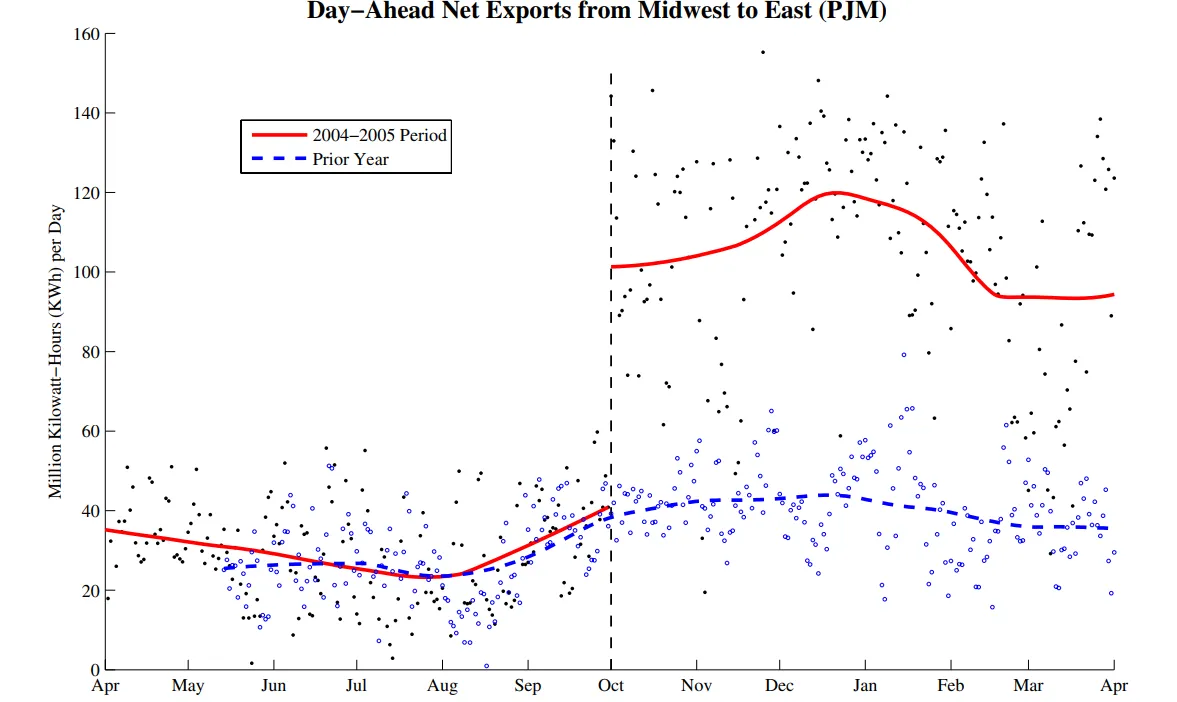
I recall being part of PJM when the American Electric Power system integrated into its framework in 2004. This integration marked a significant increase in power flows, as evidenced by a study showing nearly double the flows following this integration compared to before.
The Challenges of the ‘Contract Path’
There’s a unique attraction to bilateral markets in the West, often referred to as the “contract path” model. This terminology can be misleading, suggesting a flow of electricity similar to that of gas in pipelines. In reality, electricity travels at the speed of light, and congestion in one utility system can impact nearby systems.
As a result, utilities working without an independent system operator may need to restrict their transmission to prevent issues for adjacent systems. These operators face tough choices, such as how much capacity to reserve for potential emergencies while still providing some transmission access, all while needing to curtail transactions if demand exceeds limits.
For third-party users, especially those utilizing renewable energy, deciding how much transmission service to procure can be difficult because aiming for full output often comes with high costs. Scheduling use can also get complicated, requiring unconventional paths along the transmission lines.
Optimizing Current Resources
Achieving economic efficiency and ensuring reliability requires an independent operator to manage resources wisely across a wide area under a unified tariff system. This model benefits variable resources and greatly reduces the constraints linked to the contract-path approach previously mentioned.
It’s a common belief that efficiencies in organized markets are overstated, sometimes due to the prevailing fuel prices affecting electricity rates—primarily natural gas in the East over recent years. However, effective network dispatch maximizes the existing transmission capacity, allowing more generation to reach consumers across a wider area.
While it’s acknowledged that further transmission development is needed nationwide, the focus should be on maximizing how we use current resources. Unlike the Eastern Interconnection, which enjoys efficient uses of its transmission capacity, the West has room for improvement. By advancing beyond simply establishing day-ahead markets toward a more integrated regional dispatch model, we can greatly improve service for western customers.