

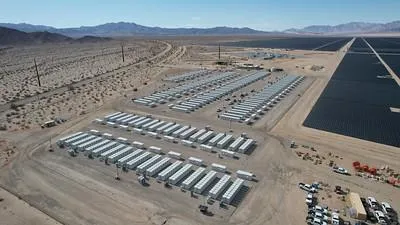
California Moves to Enhance Safety for Battery Energy Storage
- California is planning to introduce new safety and operational standards for battery energy storage facilities, as outlined in a proposal by the California Public Utilities Commission (CPUC) released on Monday.
- The proposal follows a significant incident where a fire destroyed much of a 300-MW battery system at Vistra Corp.’s Moss Landing Energy Storage Facility near Santa Cruz, provoking concerns about the safety of such facilities from local authorities.
- The CPUC intends to vote on the proposal in a meeting scheduled for March 13, and expects the changes to involve “no significant cost.”
Background and Concerns
The fire on January 16 marked the most severe of several safety issues at the Moss Landing facility since 2020, with another incident occurring in September 2022 at a nearby battery installation operated by Pacific Gas & Electric. Fortunately, there were no injuries reported in the recent fire, and the federal air quality monitoring showed no risk to public health.
Despite this, local officials expressed serious concerns regarding the plant and the overall safety protocols of battery energy storage facilities. Monterey County Supervisor Glenn Church referred to the incident as a “worst-case scenario,” while California Assemblymember Dawn Addis pledged to explore all possible measures to prevent similar fires in the future.
Proposed Standards
The CPUC’s proposal aims to enforce safety standards for the maintenance and operation of battery storage facilities as mandated by a state law passed in 2022. This legislation requires the CPUC to enhance the safety measures in place for energy storage facilities, which had not been carefully considered in older regulations.
Energy storage capacity in California has surged from roughly 500 MW in 2019 to around 13,300 MW last year, indicating a rapid expansion of these systems. The state has experienced at least 10 major safety incidents related to energy storage in the last five years, further emphasizing the need for stringent safety regulations.
The updated guidelines will introduce 18 specific maintenance standards and 28 operating standards tailored for battery storage operations. These include protocols for routine inspections, emergency preparedness, and other essential operational elements.
Moreover, facility owners will be mandated to create comprehensive emergency response plans in accordance with recent state legislation passed in 2023.