

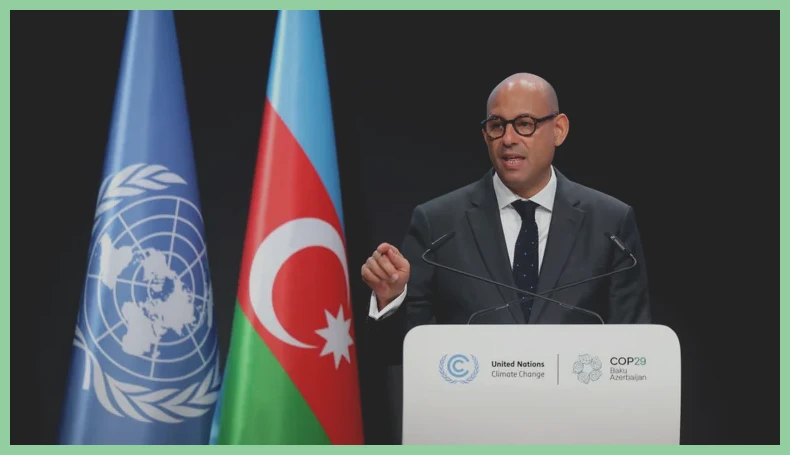
Update from COP29 Summit:
- On the first day of the COP29 summit in Baku, Azerbaijan, climate negotiators announced an important agreement on standards aimed at strengthening the global carbon market.
- The newly approved standards are part of Article 6.4 of the Paris Agreement and were hailed by Yalchin Rafiyev, the summit’s lead negotiator, as a significant advancement for ongoing climate discussions.
- These standards are designed to identify and support projects that facilitate emission reductions, while also promoting cooperation among countries and businesses working towards reducing carbon emissions.
Key Takeaways:
The carbon market mechanism is outlined under Article 6, which provides a framework for countries to collaborate on climate goals. The recent standards are intended to increase demand for carbon credit projects, thereby channeling financial support towards developing nations. According to negotiators, implementing these changes could lower the costs associated with national climate action plans by nearly $250 billion annually.
Simon Stiell, the Executive Secretary for the UN Climate Change, emphasized that this decision was the result of over ten years of effort. He noted that the new centralized carbon market will help countries execute their climate strategies more efficiently and affordably.
As the summit progresses, it’s evident that more efforts are needed to achieve substantial emission reductions. Rafiyev referred to the carbon crediting system as a “game-changing tool” that has achieved critical progress on Article 6, which is one of the main objectives of COP29.
While Article 6.4 has been approved, negotiators still need to finalize Article 6.2, which deals with the exchange of emission reductions between countries and private entities. This collaborative approach is fundamental for adapting to low-carbon practices and encouraging climate-friendly initiatives.