

Brief:
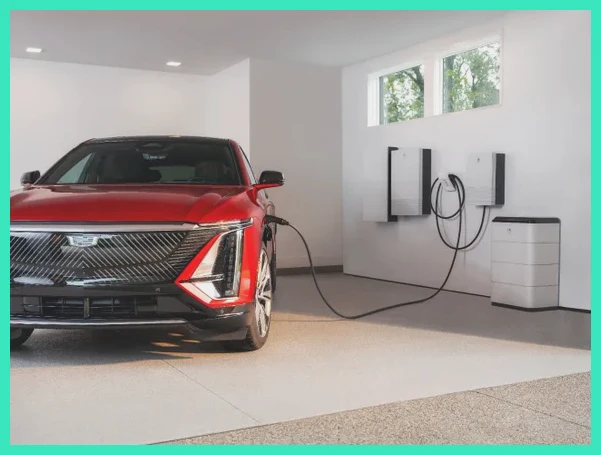
- In a groundbreaking move, GM Energy, a subsidiary of General Motors Co., has unveiled the revolutionary “GM Energy PowerBank,” a stationary energy storage unit designed to empower electric vehicle (EV) customers. This innovative product enables users to store and redistribute energy sourced from the grid, as announced in a recent press release.
- With storage options available at 10.6 kWh or a robust 17.7 kWh, the PowerBank stands ready to provide backup power during blackouts or assists in mitigating exorbitant electricity rates during peak demand periods.
- Available as part of the comprehensive GM Energy Home System bundle—complete with a dedicated charger and vehicle-to-home hardware kit—this system is seamlessly integrated with GM vehicle mobile apps, granting users remote management of their energy resources.
Insight:
Amidst a flurry of new electric vehicle launches and home charging innovations, the potential to leverage stored battery energy emerges as a savvy strategy for consumers eager to trim charging costs and diminish their dependency on traditional grids.
Earlier this year, GM Energy announced its vehicle-to-home (V2H) charging solutions, which encompass a suite of hardware essential for transferring energy between compatible GM EVs and suitably outfitted homes. Owners of the V2H charging apparatus can now enhance their energy storage capabilities with the addition of the PowerBank.
A remarkable feature allows for the connection of two PowerBanks, effectively doubling the storage capacity up to an impressive 35.4 kWh—enough to sustain the average U.S. household for an astounding 20 hours.
“One of the core differentiators of GM Energy’s portfolio is its modularity,” emphasized Wade Sheffer, VP of GM Energy, in the announcement. “Our suite of energy management tools, combined with one of the industry’s broadest collections of vehicle-to-home-capable EVs, empowers our customers with greater control over their energy consumption, ultimately reinforcing their resilience against outages, facilitating the integration of renewable energy sources, and unlocking additional benefits.”
For those keen on enhancing their energy solutions, GM EV customers can also acquire an optional solar panel system to charge their vehicles or provide supplementary power to their homes independently. GM Energy will guide interested customers to its preferred partner Qmerit, ensuring compatibility and installation prerequisites are met.
To engage customers effectively, GM Energy has launched an interactive website enabling users to connect with product specialists. This platform offers insights into pricing, costs, and delivery schedules for the PowerBank and other offerings, which may vary based on installation needs.
The landscape of bi-directional charging and energy storage isn’t limited to GM; competitors are stepping up with their own innovations. Tesla’s Powerwall, introduced in 2015, serves as a backup power solution, particularly during periods of high demand.
Ford has also ventured into this domain, presenting a V2H charging kit designed for the electric F-150 Lightning. This setup requires an investment in Ford’s Charge Station Pro alongside their Home Integration System, enabling users to tap into the energy stored within the truck’s battery. According to Ford, an F-150 Lightning, equipped with optional extended-range battery capabilities, can power the average home for an impressive three days.
Looking ahead, BMW is set to revolutionize the market with its forthcoming “Neue Klasse” EVs, aimed at not only storing electricity for relaying back to the grid but also functioning as portable power sources for households. The debut models are slated to roll into production by 2025.