

Dive Brief:
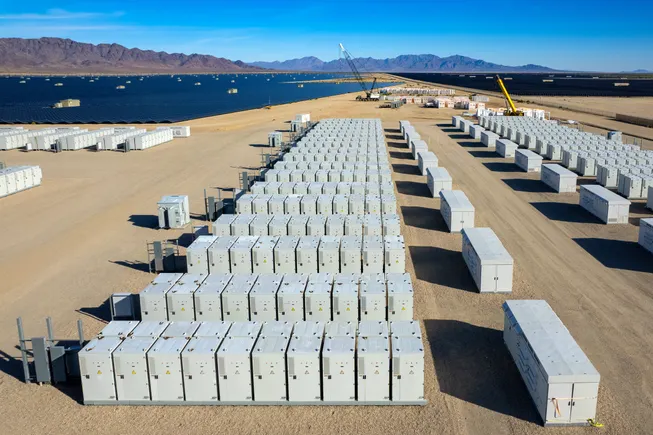
- The United States welcomed 3.3 GW/8.4 GWh of new energy storage during the first quarter of 2026, as reported by Wood Mackenzie and the American Clean Power Association. All sectors—utility-scale, residential, and commercial—achieved record installations for this typically slower period.
- According to forecasts, cumulative energy storage capacity in the U.S. is expected to reach 200 GW/655 GWh by 2031, marking a significant increase from current levels. This aligns with predictions from the U.S. Energy Information Administration indicating that storage capacity will double by the end of 2027.
- Wood Mackenzie and ACP’s recent updates anticipate that supportive tax policies and a growing demand for energy storage will lead to an increase in installations over the coming years as domestic battery manufacturing ramps up.
Dive Insight:
The latest reports from Wood Mackenzie and the EIA showcase robust growth potential for the U.S. battery energy storage sector. The EIA forecasts a significant rise in electricity consumption, driven primarily by sectors such as commercial and industrial.
In 2026, higher temperatures are expected to increase electricity demand, which renewable sources are expected to meet. Solar energy is predicted to rise by 19% and wind energy by 10% this year.
Solar and battery installations, often paired together, continue to dominate new energy generation efforts in the U.S. In the first quarter of 2026, solar and storage represented 91% of new generating capacity, with nearly half of new residential solar systems also including battery storage.
A crucial factor fueling the growth in battery storage is the federal investment tax credit for qualifying systems. This program, established under the Inflation Reduction Act, offsets a significant portion of deployment costs.
By 2031, it is anticipated that utility-scale storage will contribute 85% of new capacity as large customers partner with energy storage providers. Meanwhile, the commercial and industrial sector is projected to grow by 26% due to strong demand, especially in California.
Domestic battery manufacturing is set to increase to meet the anticipated demand, supported by recent changes in tax policy promoting in-country production. The Energy Storage Coalition has reported that U.S. factories are now positioned to meet all domestic energy storage needs.