

Rising energy demand, inflation, and unpredictable weather conditions are driving up electricity costs more quickly than many households can manage, and experts caution that there are no straightforward solutions.
Addressing this issue may require a careful approach to policies. Even if effective policies are implemented, it will take time to ease the financial pressure on consumers. The U.S. Energy Information Administration (EIA) forecasts that the average residential electricity cost will reach 18 cents per kilowatt-hour by 2026, marking a 37% increase since 2020.
Ray Gifford, a managing partner at a law firm and a former chair of Colorado’s Public Utilities Commission, remarked, “I don’t see hidden costs that can be suddenly squeezed out of the system. Most costs in this field are fixed and the assets last a long time.”
The issue of energy affordability is increasingly becoming a political topic. However, Joe Daniel from the Rocky Mountain Institute points out that many low-income families have been struggling with energy costs for years. According to a report, in 2017, 25% of U.S. households, equating to over 30 million, faced a high energy burden, characterized by spending more than 6% of their income on energy bills. For the poorest households, the burden can exceed 11% of their income.
Daniel noted a troubling trend: as electricity prices have risen faster than inflation and wages, moderate- and middle-income families are starting to feel the pinch.
Between December 2023 and June 2025, overdue energy bills increased by about 31%. Additionally, the number of disconnections due to nonpayment is expected to rise from 3 million in 2023 to 4 million in 2025.
Electricity price hikes aren’t uniform across the nation and depend on various regional factors. Residential rates have risen quicker than those for commercial and industrial users. Moreover, prices from investor-owned utilities have increased more sharply compared to public utilities, prompting regulators and officials to act.
Last year, six states introduced legislation aimed at capping utility returns on equity, with California’s Public Utilities Commission reducing it by 0.3 percentage points. Newly elected New Jersey Governor Mikie Sherrill sought to freeze electricity cost hikes and urged regulators to rethink the utility profit model.
Investors are concerned about these developments. Mark Wolfe, director of the National Energy Assistance Directors Association, critiques current measures, arguing that they may only serve to freeze rates at their highest ever. He emphasizes that low-income families are continuously falling behind as costs spiral.
Jay Griffin from the Regulatory Assistance Project articulated the need for reform in utility business models, stating that the current system rewards capital expenditures rather than addressing customer needs.
Utility companies have dedicated around $7 billion to assist consumers through programs like energy audits and bill payment plans. The Edison Electric Institute expressed their commitment to helping families in financial trouble.
Experts highlight that the factors contributing to rising electricity costs are complex. Increased demand, investments in grid infrastructure, and climate-related events all play crucial roles. For instance, data centers are a major contributor to increasing demand after years of stagnation.
Electricity consumption in the commercial sector is projected to grow, with significant demand attributed to data centers, building electrification, and electric vehicles. Studies suggest that while rising demand generally leads to higher prices, it could also benefit the grid if managed correctly.
On the flip side, rising costs in transmission and distribution are also impacting bills. Aging infrastructure and inflation have made the costs to replace grid systems increasingly burdensome for consumers.
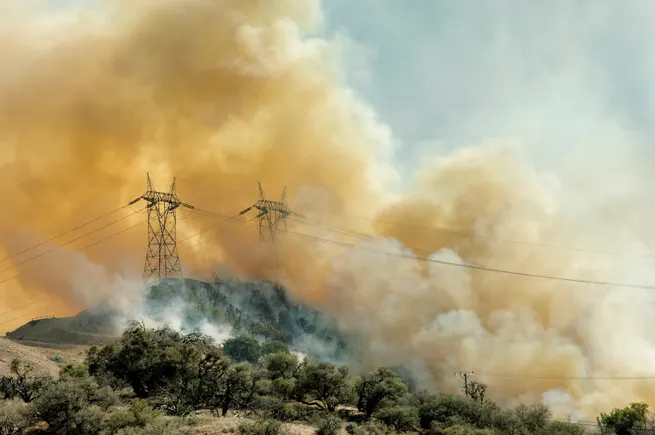
Weather events, such as hurricanes and wildfires, furthermore necessitate expensive upgrades to the grid, adding to consumer expenses. For instance, California has seen substantial costs related to wildfire mitigation, with half attributed to insurance.
There’s also a connection between rising natural gas prices and electricity costs, largely due to increased liquefied natural gas exports. Reports indicate that LNG policies are driving domestic prices up, leading to higher utility bills.
Finally, some utilities are implementing customer support solutions, but critics argue that current measures fall short. Advocates suggest that adjustments are necessary, especially for low-income customers who often struggle the most.
In summary, while the issue of rising electricity costs is increasingly highlighted, finding effective solutions may take time and ongoing policy adjustments.