

The president and CEO of the Southwest Power Pool (SPP), Lanny Nickell, has expressed concerns about the ability to meet the increasing electricity demands in the region. He stated that there may not be sufficient power supplies constructed in time to address this demand surge. As a result, SPP plans to implement demand response programs to help manage the gap between supply and demand.
Nickell highlighted that the SPP’s excess capacity is projected to drop to just 5% by 2029, a significant decrease from 24% in 2020. He emphasized the urgency of adding more generation quickly to avoid serious shortages, suggesting that relying on demand response will be crucial in overcoming this challenge.
To prepare for these heightened demands, SPP is developing a comprehensive demand response policy to expand its options. The organization forecasts that its peak load could reach 97 gigawatts (GW) by 2035, a substantial increase from last year’s 56 GW, largely driven by the rise of data centers, electric vehicles, and home heating electrification. SPP is responsible for managing the grid and wholesale power markets across 14 states, from northern Texas to Montana.
Currently, SPP has around 135 GW of proposed capacity in its interconnection queue, which includes nearly 23 GW from gas-fired generation. Nickell noted that this represents the largest amount of gas generation ever recorded in their generator interconnection queue, which is important for providing the necessary flexibility to support renewable sources like solar and wind.
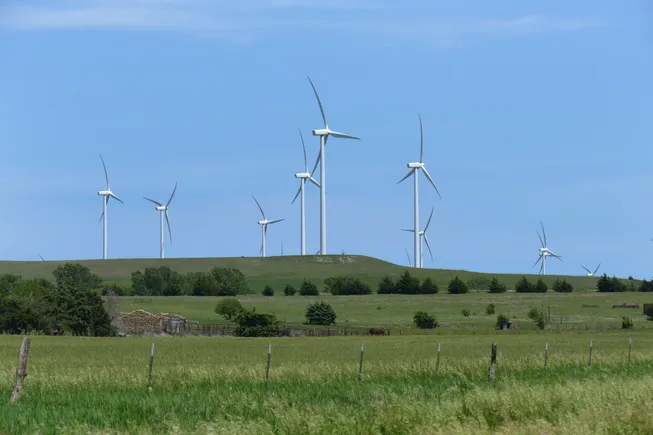
Last year, SPP’s electricity generation was comprised of 38% from wind farms, 28% from gas, and 25% from coal. Although SPP is often referred to as “the Saudi Arabia of wind,” its performance can vary widely; for instance, on June 6, 2023, the wind fleet generated only 100 MW during one hour.
To streamline processes, SPP is reforming its interconnection study procedures to ensure that generation interconnection agreements can be offered within one year of application submission. Additionally, a new consolidated planning process is being developed that will integrate studies of generator and load connections along with long-term transmission plans, expected to be operational by 2027.
As Nickell pointed out, enhancing transmission capacity is critical for accommodating future generation needs. SPP is planning a significant investment of $7.7 billion in transmission upgrades, which will include nearly 300 miles of high-capacity lines. This investment is projected to save between $88 billion and $95 billion through reduced energy costs.
Furthermore, looking ahead, SPP aims to extend its regional transmission organization (RTO) framework into the Western Interconnection, with the planned launch of RTO West on April 1, 2026. This effort will involve creating three direct current interties that will connect the Eastern and Western Interconnection regions.
With this expanded reach, SPP can access diverse energy resources more effectively, such as hydroelectric power from the Northwest, solar energy from the Southwest, and wind from its eastern areas. Nickell believes that such integration will allow for a quicker and more consistent transition to cleaner energy sources. He emphasized the importance of maximizing this potential by increasing east-to-west transfer capabilities through their transmission improvements.
SPP is at the forefront of initiatives to enhance intertie operations for more efficient trading across regional transmission organization markets. The expansion into the western territories necessitates thoughtful approaches to address unique challenges. Nickell underscored the value of these developments in optimizing energy sharing and minimizing disruptions across the interconnected grid.