

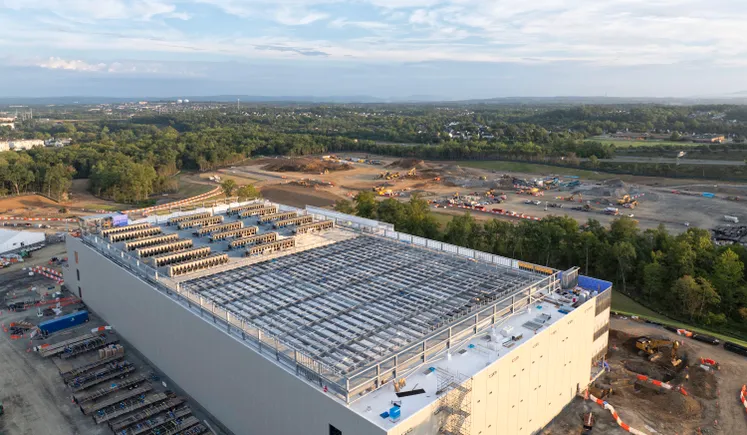
As the demand for electricity from data centers grows rapidly across the United States, a new report emphasizes the importance of developing targeted utility tariffs. The Southwest Energy Efficiency Project (SWEEP) made this suggestion in a recent report, highlighting the need to protect consumers and maintain a greener power grid as these large energy users connect to the system.
SWEEP pointed out that while advancements in artificial intelligence (AI) could bring substantial economic and social benefits, there are serious worries about the swift rise in electricity demand from data centers. This surge could significantly impact the power sector and hinder state and utility efforts to combat climate change.
The analysis indicates that data centers currently consume about 4.5% of the electricity in the U.S. However, projections from the Lawrence Berkeley National Lab suggest that this figure could jump to as much as 12% by 2028.
Furthermore, a recent survey conducted by the Electric Power Research Institute (EPRI) found that nearly half of the 25 utilities surveyed nationwide have received requests from new data centers seeking to use more than 1,000 megawatts (MW) of power. Alarmingly, some requests exceed 50% of the existing peak demand for these utilities.
SWEEP warned that the anticipated increases in energy demand present two significant risks to state greenhouse gas reduction goals. Utilities may need to rely more on fossil fuels for energy generation, and they may struggle to incorporate enough renewable energy sources to meet the rising demand due to vehicle electrification and other industrial needs.
To mitigate these challenges, SWEEP urges utilities to ensure that new data centers, along with other large commercial or industrial clients with demands over 50 MW, commit to providing enough revenue over a contract period of about 12 years to cover the necessary investments in generation and transmission.
The report also recommends that utilities propose tariffs requiring these large data centers and similar clients to source 100% of their electricity from renewable or net-zero carbon generation facilities.
Additionally, utilities should collaborate with large data centers to create new demand response and energy efficiency programs while avoiding financial subsidies, such as reduced electric rates, for these facilities. Instead, any incentives should be directed toward new commercial or industrial projects that offer broader job creation and economic benefits.
SWEEP further suggests that to show accountability and responsibility to the public interest, these large customers report their annual renewable energy usage, track their hourly electricity consumption in relation to renewable energy purchases, and share metrics on their water and energy efficiency efforts.