

During a recent House hearing, Todd Brickhouse, CEO of Basin Electric Power Cooperative, urged Congress to keep the clean energy tax credits provided by the Inflation Reduction Act. He emphasized that stopping the production tax credit would disrupt utilities’ planning and could lead to higher costs for consumers.
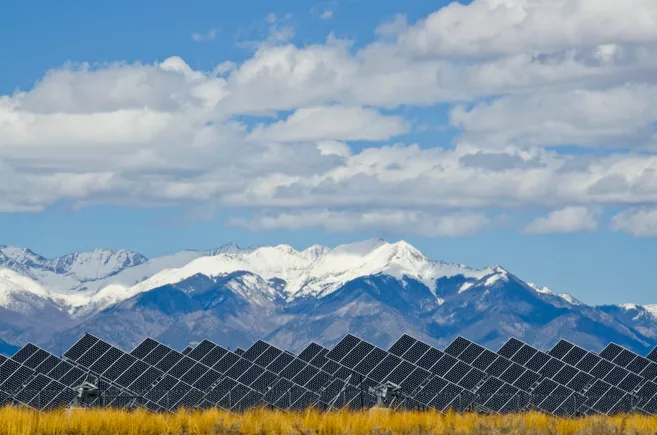
Basin Electric, based in Bismarck, North Dakota, is in the process of constructing 1,500 megawatts of solar power, relying on the assumption that this capacity will qualify for the production tax credits mentioned.
As congressional Republicans strive to cut federal spending for their budget, discussions are underway regarding potential adjustments to the tax credits included in the Inflation Reduction Act.
Representative Mariannette Miller-Meeks from Iowa highlighted the significance of these tax credits in advancing necessary energy infrastructure to accommodate increasing electric demand. She noted that incentives like the tech-neutral clean energy credits and carbon sequestration credits are crucial for enhancing American manufacturing and reducing risks associated with major energy projects.
Noel Black, senior vice president of regulatory affairs at Southern Co., also remarked on the importance of these tax credits, stating that they play a vital role in making energy projects affordable for customers.
Representative Brett Guthrie from Kentucky, chair of the Energy and Commerce Committee, pointed out that renewable energy sources, especially wind and solar, are essential for meeting electricity demand due to their quicker build times. However, he cautioned against overly incentivizing these sources at the expense of other types of energy generation.
Grid operators across the U.S. are currently facing backlogs in new interconnections, slowing the introduction of new power sources. Asim Haque from PJM Interconnection shared that the Federal Energy Regulatory Commission recently approved a plan to streamline the process for certain projects, allowing them to enter into a unique interconnection study.
PJM anticipates that renewable energy, energy storage, and enhancements to existing nuclear and gas facilities will help meet immediate power supply needs. However, they also predict that future additions will likely include more gas-fired plants, as small modular nuclear reactors are still several years away from deployment.
Black accentuated the necessity for more natural gas infrastructure to address the growing demand, stressing that pipelines and transmission systems are urgently needed. Yet, he raised concerns that a rapid expansion of gas-fired plants could deter investments in advanced technologies like nuclear or geothermal energy.
Tyler Norris, a PhD student at Duke University, echoed this sentiment, cautioning that if investors believe policy favors gas over other technologies, it may deter them from investing in more innovative solutions. He also suggested looking at ways to expedite resource availability, proposing to model the Electric Reliability Council of Texas’ interconnection approach as a possible solution for quicker deployment.