

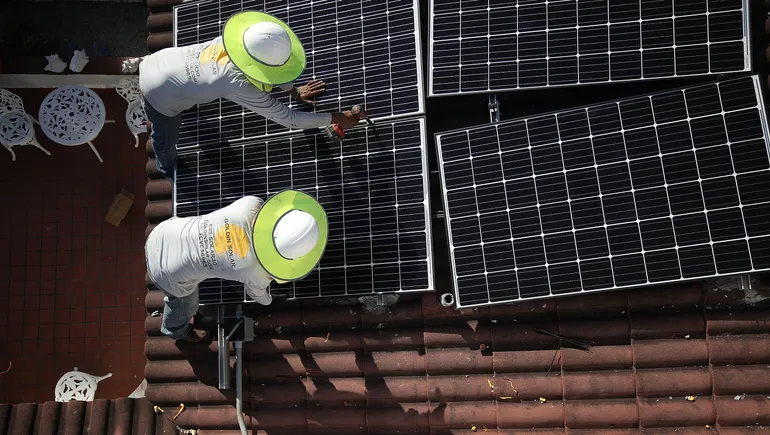
Overview:
- The U.S. Environmental Protection Agency (EPA) has put a hold on funds for its Solar For All initiative. This program is part of the Inflation Reduction Act’s efforts to provide residential solar energy to low-income and disadvantaged households.
- Despite Congress approving all funding from the Inflation Reduction Act, the funds for the Solar For All program remain frozen, as noted by Sachu Constantine, the executive director of Vote Solar.
- Constantine mentioned that solar projects require significant initial investments, and uncertainties about funding can disrupt progress as plans need to be paused.
Insights:
An EPA spokesperson stated that neither the EPA nor the Department of Justice can share specific details about ongoing legal cases related to the funding freeze.
The Solar For All program was set to distribute $7 billion in grants to various awardees, including states, local governments, and non-profit organizations, with a goal of providing solar energy to at least 900,000 households across the country.
Even with the hold on funds, some grantees, like Pennsylvania state representative Elizabeth Fiedler, are actively seeking access to funding. Fiedler introduced a bill to allow the Pennsylvania Energy Development Authority to access $156 million earmarked for a state Solar For All program.
The organization Indigenized Energy announced that two tribes, the Chippewa Cree Tribe and the Oglala Sioux Tribe, completed initial solar projects funded by their Solar For All grant, providing low-cost energy to homes on tribal lands. Further project launches are expected in spring 2025, subject to weather conditions.
Many other projects across the U.S. are at various stages of development, but the ongoing freeze raises concerns. Constantine pointed out that many were prepared to start spending their allocated funds and finalizing plans when the funding freeze occurred.
In a letter sent to EPA Administrator Lee Zeldin, four Democratic lawmakers, including Rep. Rosa DeLauro and Sen. Patty Murray, requested more information on the funding hold. They expressed concerns that such freezes could harm public health and increase energy costs for families, as well as limit potential job opportunities from important programs.
Looking ahead, Constantine expressed worry that if Trump’s administration continues to gain power and influence, programs related to clean energy could face further setbacks.
He emphasized that regardless of political changes, it is crucial to continue advancing solar energy and the transition to a cleaner energy economy. The current situation poses a significant and troubling challenge to the progress targeted by the Solar For All initiative.