

Market Overview:
Independent power producers saw a significant decline in their stock prices on Monday, coinciding with a widespread drop in technology and AI infrastructure stocks. Companies with large nuclear and gas generation assets in unregulated markets took the hardest hits. Notable declines included Vistra Corp., which dropped more than 28%, Talen Energy, which fell over 21%, and Constellation Energy, which also saw a decrease of more than 21%.
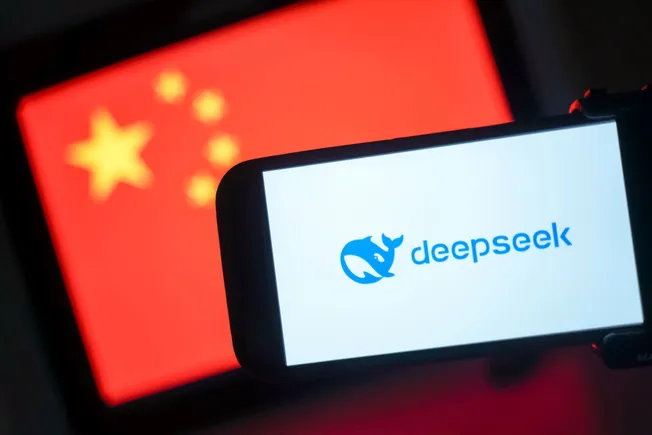
This downturn followed the release of advanced AI models by the Chinese startup DeepSeek, which are said to have training costs up to 45 times lower than leading U.S. models from companies like OpenAI and Anthropic. DeepSeek’s AI assistant quickly rose to be the most downloaded free app on Apple’s platform, surpassing ChatGPT.
According to Jefferies, an investment bank, DeepSeek’s success raises concerns about the projected surge in electric demand in the U.S. AI is expected to contribute to about 75% of the country’s demand forecasts through 2035.
Market Analysis:
Monday’s stock selloff wiped out the year-to-date gains for Vistra and Talen, even though their current stock prices remain more than double what they were a year ago. Constellation has also experienced a notable year-on-year increase of around 127%.
Nuclear technology companies like Oklo and NuScale have exhibited impressive growth in their stock values this past year. Oklo’s valuation has more than doubled since its IPO in May 2024, while NuScale has surged by 580% since January 2024. However, both companies saw over a 20% decline in their shares on Monday.
In late 2023, Oklo secured a significant 20-year agreement with data center developer Switch to provide up to 12 GW of power. Constellation announced plans to reopen the first unit at the Three Mile Island nuclear plant due to a 20-year power purchase deal with Microsoft, which is expected to add considerable value to the facility’s output.
Additionally, Talen entered into a deal with Amazon Web Services for a data center campus, predicated on power supplies from the adjacent Susquehanna nuclear plant. However, this arrangement is currently facing intense scrutiny from regulators.
Amazon and Google are also investing in nuclear tech firms, X-energy and Kairos Power, to power their data centers starting in the early 2030s. On the trading floor, Amazon’s stock rose by 0.3%, while Google’s parent company, Alphabet, saw a decline of 4%.
These developments coincide with rising projections of electricity demand. ICF has forecasted an average annual growth of 2% in U.S. electricity demand through 2033, and the Electric Power Research Institute predicts that data centers could consume around 9% of U.S. electricity by 2030.
Experts suggest these forecasts may already be outdated. Himali Parmar from ICF indicated that there could be a significant increase in demand compared to previous projections.
A recent forecast from PJM Interconnection highlighted expected growth rates of 2% for summer demand and 3.2% for winter demand through 2045, representing an increase from their previous year’s outlook.
However, improvements in AI efficiency, as shown by DeepSeek, could mean less energy-consuming methods might emerge, potentially dampening demand forecasts for independent power producers that are heavily reliant on data center growth.
Jefferies highlighted potential risks associated with these projections, noting that a slowdown in projected data center expansions could negatively impact higher-premium utilities.
Among independent power producers, Talen appears best positioned for scenarios with lower demand, as its pricing reflects less optimistic data center contracting compared to competitors. Talen may also strengthen its ties with Amazon at the Susquehanna facility.
Despite the challenges, some analysts argue that DeepSeek’s advancements could stimulate demand for AI infrastructure, as lower costs may lead to wider adoption of AI technologies amongst both businesses and consumers.
In summary, while the tech landscape is shifting and demand projections are becoming more complex, efficient AI models may offer a pathway to balance consumption and lessen the pressure on the power grid.