

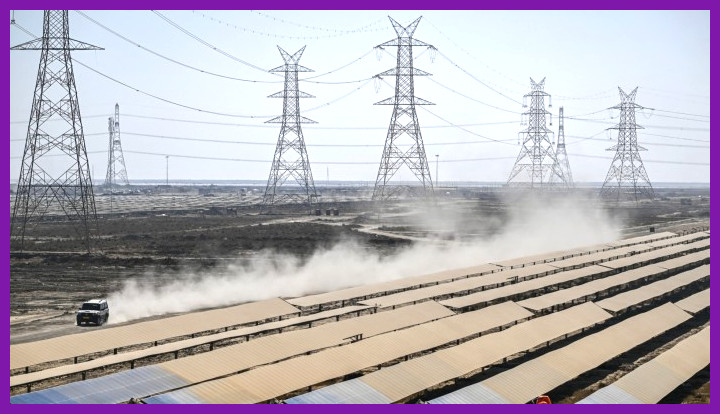
India’s second-largest renewable energy company, ReNew, is set to leave the Nasdaq following a decline of over 30% in its market value since its debut in 2021. With a market capitalization of around $2.4 billion, ReNew was established in 2011 and operates more than 10 gigawatts of renewable energy capacity, divided almost evenly between wind and solar power.
The company is part of a wider effort led by Adani Green Energy to help India reach its ambitious goal of more than doubling its non-fossil fuel power generation capacity to 500 gigawatts by 2030. This initiative comes as the country, heavily reliant on coal, tries to meet the increasing energy demand.
The Indian renewable sector is currently under strain, especially after U.S. prosecutors accused Gautam Adani and several others of being involved in a bribery scheme worth $265 million to secure green energy contracts with Indian authorities. Adani has dismissed these allegations, claiming that “every attack makes us stronger,” during a recent public event.
ReNew is proposing to buy back shares at $7.07 each, while its shares closed at $6.34 on Tuesday. This buyout involves a consortium of companies that includes Masdar, a state-owned UAE renewable energy firm, as well as strategic investors like the Canada Pension Plan Investment Board and the Abu Dhabi Investment Authority. ReNew has not commented on the matter.
Analysts at Bernstein India have indicated there is a strong likelihood that the consortium will successfully buy out the remaining shareholders and take ReNew private, though they might have to improve their offer. The analysts suggest that following this, ReNew might consider relisting in India and raising capital to maximize its potential.
Sumant Sinha, ReNew’s CEO and a former investment banker, has noted that the markets undervalue renewable energy companies, which he believes hinders progress in the green energy transition. He also mentioned that ReNew is contemplating moving its listing away from the Nasdaq due to concerns that Donald Trump’s potential re-election could negatively impact clean energy stocks.
In August, ReNew signed an agreement to supply Microsoft in India with nearly 440 megawatts of green electricity. However, a Mumbai-based energy analyst pointed out that the U.S. listing itself is a major challenge, describing the company as a relatively small player in the U.S. market, which limits potential investor interest.
Concerns about high debt levels and operating costs have raised questions about ReNew’s profitability. The analyst emphasized that the renewable energy sector typically has low margins, making cost management crucial. A research note from Morgan Stanley in September downgraded ReNew to “equal weight,” highlighting expected strong earnings growth but noting the volatility of revenue due to its significant wind portfolio and high debt levels.