

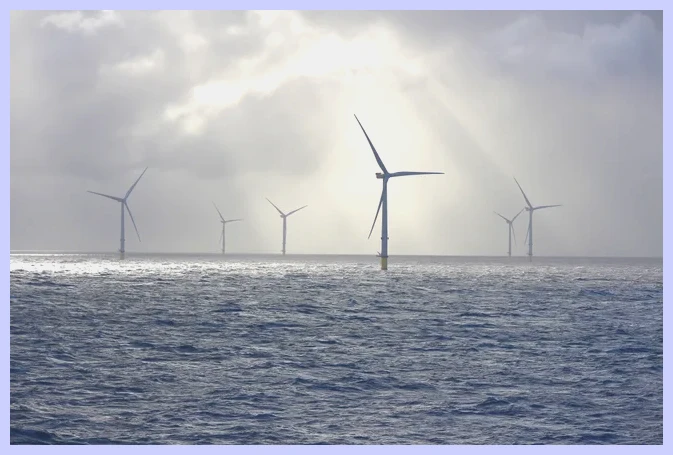
The Massachusetts legislature has recently approved a major clean energy bill aimed at boosting the state’s offshore wind industry. This legislation promises a significant investment of $200 million into the Offshore Wind Industry Investment Fund and will extend the duration of offshore wind contracts from 20 to 30 years.
In addition to financial aid, the bill aims to revamp the siting and permitting processes for clean energy projects. It also instructs state agencies and utility companies to tackle the increasing demand for electric vehicle charging. Notably, the definition of clean energy in the state has now been broadened to encompass nuclear fission and carbon capture technologies.
Moreover, the bill includes another $200 million for the Clean Energy Investment Fund and introduces a new climate technology tax credit with an annual limit of $35 million. Massachusetts Department of Energy Resources will assess the effectiveness of current solicitations in meeting state emissions goals and maintaining high labor standards in the clean energy sector.
Stephanie Francoeur, senior vice president at Oceantic Network, remarked that these legislative changes are crucial for strengthening the industry based on lessons learned during past offshore wind energy projects.
As it stands, the bill is awaiting the signature of Governor Maura Healey, who is expected to approve it soon.
Representative Jeff Roy, the primary negotiator for the bill, emphasized the importance of advancing clean energy policies at the state level, especially in light of recent events impacting climate change efforts.
Massachusetts is currently working on several large offshore wind projects, including the 2.4-GW South Coast Wind project and the combined 1.6 GW from Vineyard Wind 1 and 2, along with the 1.8-GW New England Wind project. In 2023, Massachusetts, Rhode Island, and Connecticut entered into a memorandum of understanding to coordinate offshore wind procurement, marking a significant multi-state agreement in this sector.
Representative Richard Haggerty highlighted that reducing bottlenecks in the permitting process, ensuring stakeholder involvement, and investing in new technologies not only advance climate objectives but also place Massachusetts at the forefront of the clean energy economy.